

If you’ve spent any time in gyms or fitness programs, you’ve probably heard the term “non-scale victory.” In fact, you’ve likely been coached to focus on them — especially when your weight loss goals aren’t being met or have plateaued.
But what is a non scale victory, really? And are non-scale victories actually the motivation tool they’re made out to be?
In this post, we’re going deeper than the usual definition. We’ll explore the non-scale victory meaning, why the way most people use them is actually problematic, and how shifting your focus entirely could be the key to finally staying consistent with exercise.
What Is a Non-Scale Victory? (Non-Scale Victory Meaning)
A non-scale victory — or NSV — is any win you experience from your exercise or eating habits that isn’t specifically related to weight loss.
The idea behind celebrating non-scale wins is to shift focus away from the scale and acknowledge the other gains you’re making — so you don’t feel defeated and give up on your movement routine.
Non-Scale Victory Examples
Non-scale victories typically fall into a few categories:
Fitness improvements:
- Being able to lift more, move further, or exercise longer than before
- Improved mobility, balance, or flexibility
- Feeling less winded during everyday activities
Real life functional wins:
- Carrying groceries or kids upstairs without getting out of breath
- Getting up and down off the floor with more ease
- Bending down to reach your toes when you couldn’t before
Health and wellbeing improvements:
- Sleeping better at night
- Having more energy and a better mood throughout the day
- Improvements in health metrics like blood pressure, blood sugar, or pain levels
Body composition and appearance changes:
- Changes in measurements or body fat percentage
- Noticing more definition or changes in how clothes fit
- Shifts in muscle mass versus fat mass
That last category is where things start to get a little complicated — and where my somewhat controversial take on non-scale victories begins.
Are Non-Scale Victories Accurate Measures of Progress?
Here’s where I want to challenge the conventional wisdom around NSVs — because the research on motivation tells a different story than most fitness programs do.
Want to crack the code on consistent motivation for movement? Download our FREE Guide – The Motivation Secret! Inside I spill the tea on exactly what works (and what doesn’t) to improve exercise motivation!

Download Our Free Guide to Discover the Key to Lasting Motivation
Studies clearly show that focusing on weight loss decreases long-term motivation and makes consistency harder to sustain. So in theory, shifting to non-scale victories should help, right?
It does — but only under one specific condition: when your primary reason for moving is to improve your fitness or overall wellbeing in the first place. In other words, when you’re taking a genuinely weight-neutral approach from the start.
The problem is, that’s not usually how non-scale victories get used.
When Non-Scale Victories Become Problematic
In practice, most people only start celebrating non-scale wins when the scale isn’t moving. And that’s a significant distinction.
When that’s the context, what we’re really saying is: “Well, my weight isn’t changing — but at least I have this.”
It feels like grasping at straws. Like trying to find something — anything — to justify all the effort. And the non-scale wins that would otherwise feel genuinely meaningful start to feel like consolation prizes.
What tends to happen next is predictable: the NSVs are enough to keep you going for a while. But if the scale still doesn’t change? Eventually, interest fades. You feel like you’ve failed. And you find yourself back at square one, looking for a different solution that will finally “work.”
That’s the real problem with non-scale victories as they’re typically framed — they still place weight loss at the centre of the goal. Everything else, no matter how meaningful, remains secondary.
Why Diet Culture Got Exercise All Wrong
The language around non-scale victories is confusing — and that confusion runs deeper than most people realise.
Even when the focus shifts away from the scale, if you’re still measuring the effectiveness of your workouts by how your clothes fit or what you see in the mirror, you’re still operating under the same fundamental belief: that the main objective of exercise is to change your body.
Here’s the truth that diet culture doesn’t want you to sit with:
Exercise was never designed for weight loss.
Body changes — if they happen when you exercise — are a secondary side effect of improving your fitness. The actual point of exercise is to become fitter. Stronger. To improve heart and lung function, flexibility, and pain levels. To support your body in functioning well.
Any changes on the scale are, at best, incidental.

Non-Scale Wins Are the REAL Victories — Here’s the Shift
When we stop treating functional, real-life improvements as “consolation prizes” and start treating them as the entire point — everything changes.
You can’t measure fitness on a scale. A change in weight tells you nothing about your athletic ability, your strength, your stamina, or your pain levels. Fitness is measured through fitness assessments. And you get fitter by consistently practising movement that targets the specific areas you want to improve.
For example:
- Want to carry the kids upstairs without getting winded? Strength training and cardio.
- Want to touch your toes? Yoga and flexibility work.
- Want less knee pain? Strength training and mobility exercises.
The goal of fitness is to become fitter — and that’s what we should be measuring, celebrating, and working toward. Not digging for silver linings when the scale doesn’t cooperate.
A Weight-Neutral Approach to Setting Fitness Goals
This is the foundation of everything I do in my coaching practice. Instead of chasing body changes and hoping fitness follows, we flip the model entirely — starting with real-life, measurable outcomes and letting fitness lead.
Here’s the five-step process I use with my clients. You can use it yourself to make what you might have once called “non-scale victories” your primary victories.
Step 1: Set Real-Life Fitness Goals
Think of something that isn’t easy for you right now — or something you can’t currently do — that you’d genuinely like to be able to do.
- Carrying groceries in one trip without fatigue
- Getting up off the floor without needing to grab something
- Going for a hike without worrying about keeping up
- Reducing a specific pain level or health metric like blood pressure
If you find it hard to separate weight from your goal, ask yourself: what do I hope will be easier or better once I lose weight? Those answers are your real fitness goals. Set the weight part aside and focus there.
Step 2: Rate Your Current Fitness in That Area
Before you start, establish a baseline. On a scale of 1–10:
- How winded are you climbing a flight of stairs?
- When you bend forward, what can you reach — your shins, ankles, toes, the floor?
- What’s your pain level on an average day?
Write it down. This is the starting point you’ll measure against.

Step 3: Choose Movement That Targets Your Specific Goal
Not all exercise serves all goals equally. Tailoring your movement to your actual objective makes progress faster and more motivating.
- For reducing knee pain → strength training and leg mobility work
- For lowering blood pressure → moderate intensity cardio like a daily 20-minute walk
- For building functional strength → resistance training two to three times per week
Step 4: Make It Genuinely Motivating
Whatever you choose, it needs to feel good in your body and — ideally — be something you actually enjoy. Surrounding yourself with a supportive community of people with similar goals and mindsets makes a significant difference in how long you’ll stick with it.

Step 5: Reassess After Two to Three Months
After a period of consistent movement, revisit the same baseline measures from Step 2. Notice what’s changed — and don’t forget to acknowledge any surprise benefits that have shown up along the way, like better sleep or improved energy.
Want to Dig Deeper? Listen to this Podcast Episode about Non Scale Victories
On episode 89 of The Power in Motion Podcast we talked all about the problems with non-scale victories. Listen here:
https://podcasts.apple.com/ca/podcast/the-power-in-motion-podcast/id1537948979
If you enjoyed this episode, please subscribe to The Power in Motion Podcast on Apple or Spotify..
The Bottom Line on Non-Scale Victories
Non-scale victories aren’t the problem. The way we’ve been taught to use them is.
When the functional improvements in your daily life — the energy, the strength, the reduced pain, the stairs that don’t wind you — are treated as the primary measure of success from the very beginning, everything shifts. You’re no longer looking for silver linings. You’re tracking real, meaningful progress that connects directly to how you feel and function every day.
And here’s what I can tell you from 15 years of working with women who’ve rebuilt their relationship with movement: when you focus on fitness — on feeling better and moving better — and you take consistent action toward that, you will see improvements. Real, tangible ones.
You’ll stop waiting to see what the scale does. Because you’ll already know it’s working.
Ready to Start Moving in a Way That Actually Fits Your Life?
If this way of thinking about fitness resonates with you, the next step is finding movement that’s built around your real goals — not your body’s shape or size.
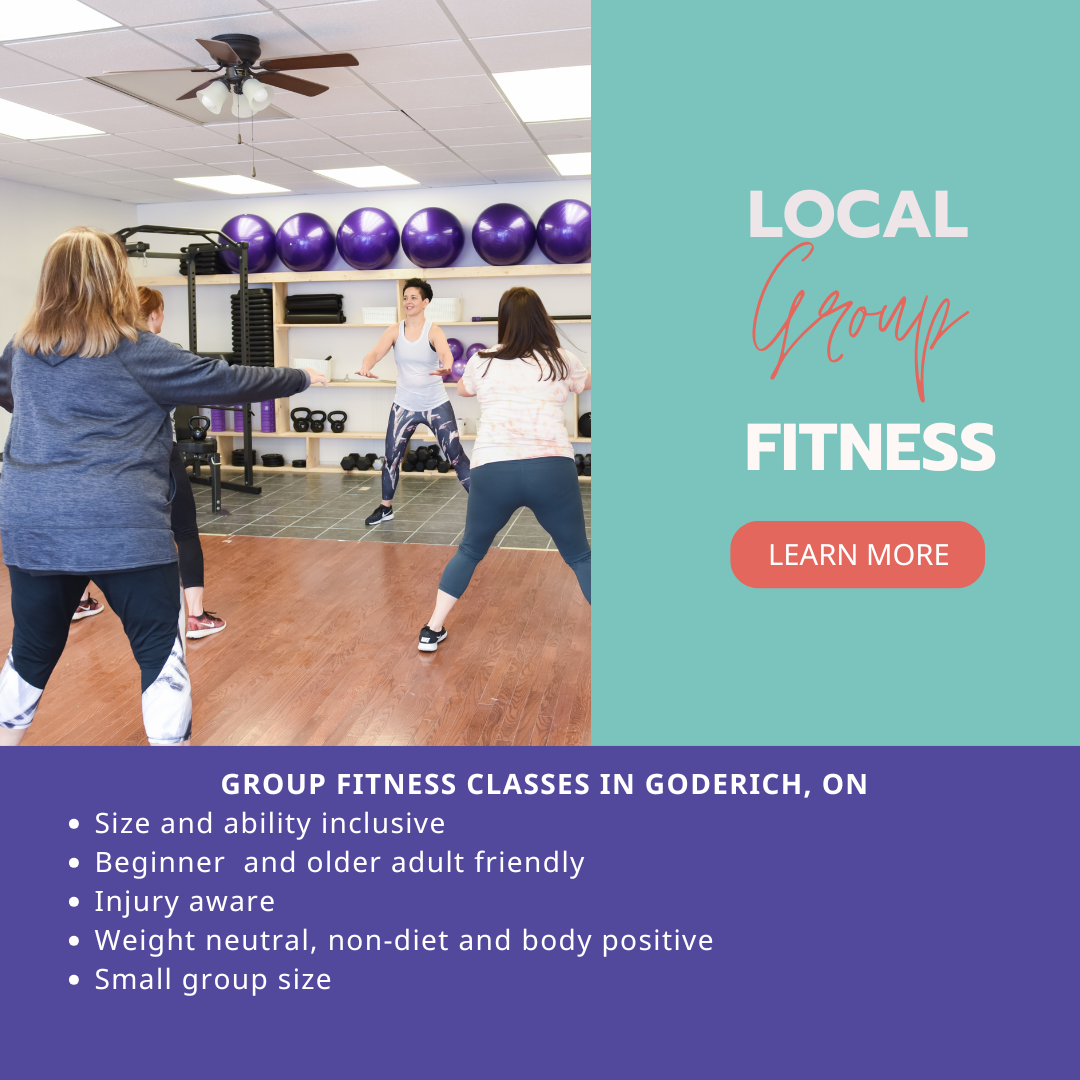
If you’re looking for in-person support, my local group fitness classes are a welcoming, judgment-free space designed specifically for women who’ve felt left behind by traditional fitness culture. No intensity pressure. No appearance focus. Just real movement, real community, and real progress.
Prefer to move from home? Grab my Fitness Motivation Secret to learn why you find yourself stuck on the stop start cycle and how you can find that consistency and joy for movement you desire. Inside you’ll learn the 3 game changing things you can focus on to cultivate motivation and the one mistake that most people make that is KILLING your desire to move!
Whichever feels right for where you are right now — there’s a place for you here.



0 Comments