

Fitness success is rarely built on dramatic overhauls or perfect routines. More often, it’s built quietly—through small, repeatable actions that feel manageable in real life. For women over 40, especially those who’ve been burned by rigid fitness plans or discouraged by past experiences, learning to notice and celebrate small fitness wins can be transformative.
If you’ve ever felt like you’re “behind,” inconsistent, or doing “not enough,” this post is for you. Because sustainable fitness isn’t about doing more—it’s about doing what you can, consistently, and letting those efforts compound over time.
Why Small Wins Matter More After 40
By the time many women reach their 40s, fitness is no longer just about aesthetics. It’s about having enough energy to get through the day, managing joint pain or chronic conditions, maintaining strength and balance, and feeling capable in your own body.
At the same time, the barriers often increase. Hormonal shifts, longer recovery times, caregiving responsibilities, demanding jobs, and a history of all‑or‑nothing fitness attempts can make it harder to stay consistent. Research consistently shows that consistency—not intensity—is the strongest predictor of long‑term health outcomes, particularly as we age.
This is where small wins come in. Behavioral science tells us that achievable goals create positive feedback loops in the brain. Each small success releases dopamine, reinforcing the behavior and making it more likely you’ll repeat it. Over time, these wins stack up into habits that feel natural rather than forced.
In contrast, overly ambitious plans often trigger guilt, shame, and burnout. When the goal feels unattainable, skipping one workout can spiral into quitting altogether. Small wins interrupt that cycle.
Sources:
– American College of Sports Medicine on consistency and long-term fitness
https://www.acsm.org/news-detail/2021/08/09/consistency-is-key-for-long-term-fitness-success
– BJ Fogg’s behavior model overview
https://behaviormodel.org/
🧠 Evidence-Informed, Not Perfection-Based
If motivation has been a struggle for you, this builds on the same idea I explore in
This approach to fitness isn’t about pushing harder or doing more—it’s grounded in research and real life.
Studies consistently show that consistent, moderate movement improves strength, mobility, mood, and sleep over time—especially for adults over 40. At the same time, perfectionism and “all-or-nothing” thinking are linked to lower long-term adherence.
That’s why we focus on small, repeatable wins instead of extreme plans.
Not because it’s easier—but because it works.
👉 [7 Surprising Ways to Improve Exercise Motivation]
Progress doesn’t require punishment. It requires support, flexibility, and meeting your body where it is today.
What “Small Fitness Wins” Actually Look Like in Real Life
Small wins are deeply personal. What feels easy for one person might be a big stretch for another—and that’s exactly the point.
Here are some real‑life examples many women recognize immediately:
- You planned a 30‑minute workout but only had energy for 10—and you did the 10 anyway.
- You lifted the same dumbbells as last week, but the movement felt more stable and controlled.
- You modified an exercise instead of pushing through pain.
- You showed up to class feeling exhausted and left feeling more energized.
- You skipped a workout to rest—and noticed you felt better the next day because of it.
None of these moments look impressive on social media. But each one reinforces an important identity shift: I listen to my body. I follow through. I take care of myself.
Those seemingly tiny changes matter far more than any single workout.
Strength That Shows Up Where It Matters
Michelle’s story is a perfect example of how small, intentional progress adds up in meaningful ways.
Michelle lives on a farm, works as a nurse, and has three young boys — which means her days are physically demanding before you even factor in exercise. When we started working together 1:1, she was recovering from a shoulder injury that made barn chores difficult and frustrating. She also dealt with back pain that came and went, especially after long shifts or busy days at home.
Instead of pushing her through generic workouts, we focused on movements that were safe for her shoulder and back and relevant to her real life. Deadlifts became “picking up a bucket.” Woodchops became “moving a bag of feed.” We used visual cues that matched the demands of her day, so the strength she was building felt familiar and usable.
Six months later, Michelle shared something that stuck with me. She told me, “Barn chores are just lovely to do now.” She’s been able to pick up more nursing shifts and notices far less muscle stiffness after long days. One of her favourite wins? How easy it feels now to sit up from lying down — a small, everyday movement that used to take effort and now happens without thought.
That’s the power of small wins. Not dramatic transformations, but quiet improvements that make daily life feel lighter, easier, and more capable.
Moving Away From the All‑or‑Nothing Trap
Many women over 40 come into fitness carrying a lot of baggage—diet culture rules, punishment‑based exercise, or the belief that if they can’t do something “properly,” it’s not worth doing at all.
This mindset often sounds like:
- “If I can’t do the full workout, there’s no point.”
- “I missed last week, so I might as well start over next month.”
- “It only counts if I’m sore.”
Small‑win thinking gently challenges this.
Instead of asking, Did I do it perfectly? the question becomes, What did I do today that supported my body—even a little?
This shift is especially important for women managing chronic pain, fatigue, or fluctuating energy levels. A workout that feels productive one week may feel impossible the next—and that doesn’t mean you’re regressing. It means your body is responding to life.
Non‑Scale Victories: Progress You Can Feel
Because this space is intentionally body‑ and weight‑neutral, progress isn’t measured by shrinking or changing appearance. Instead, we focus on non‑scale victories—changes that improve how your body feels and functions.
Some of the most meaningful non‑scale victories women report include:
- Sleeping more soundly or falling asleep faster
- Feeling less stiff in the morning
- Carrying groceries, laundry, or kids with more ease
- Standing up from the floor or a chair more comfortably
- Noticing improved balance or coordination
- Feeling calmer or more emotionally regulated after movement
Research supports these benefits. Regular movement has been shown to improve sleep quality, mood, joint health, and cognitive function independent of weight loss. These changes often appear well before any visible physical changes—and they’re often what keep people going.
When you start paying attention to these signals, motivation becomes internal rather than dependent on external validation.
Source: Physical activity and health outcomes review (NIH)
https://www.ncbi.nlm.nih.gov/pmc/articles/PMC4241367/
How Small Wins Build Motivation (Without Willpower)
Motivation is often misunderstood as something you either have or don’t. In reality, motivation is created through action—not the other way around.
Small wins make it easier to take that first step. When the goal feels achievable, you’re more likely to start. When you start, you’re more likely to finish. When you finish, you feel successful. And that success fuels the next action.
This creates a powerful cycle:
Small action → positive feedback → increased confidence → repeated action
Over time, movement becomes part of your routine—not because you forced it, but because it fits.
This is especially important for women who’ve spent years feeling like fitness is something they “fail at.” Small wins rewrite that story.
Source: Habit formation and behavior reinforcement (NIH)
https://www.ncbi.nlm.nih.gov/pmc/articles/PMC4445119

Download Our Free Guide to Discover the Key to Lasting Motivation
Better Ways to Track Progress (Without Body Measurements)
Tracking progress doesn’t have to mean numbers, scales, or photos. In fact, for many women, those tools create more stress than clarity.
Here are body‑neutral ways to track progress that actually support motivation:
1. A Wins Journal
At the end of each day or workout, write down one thing that went well. It could be physical (“held a plank longer”), emotional (“felt proud I showed up”), or practical (“fit movement into a busy day”). Over time, patterns emerge that reveal real progress.
2. Energy and Pain Check‑Ins
Notice how you feel before and after movement. Is your energy more stable throughout the day? Are certain aches improving? These qualitative markers often tell a more accurate story than numbers ever could.
3. Strength and Skill Benchmarks
Instead of appearance changes, track capability:
- Using a heavier band
- Completing more reps with good form
- Feeling steadier during balance work
4. Real Life Gains
- Less winded going up stairs
- Carrying more groceries in one trip
- Able to get up and down off the floor with more ease
- Confidence to try new things without worrying if you can “keep up”
These markers reinforce function and confidence.
Research suggests that reflective tracking methods—such as journaling and self-check-ins—can improve motivation and adherence to physical activity without increasing body dissatisfaction.
Source: Frontiers in Psychology on self-monitoring and motivation
https://www.frontiersin.org/articles/10.3389/fpsyg.2019.02274/full
What Small Wins Look Like Over Months (Not Days)
One of the hardest parts of fitness is trusting that small efforts matter when results aren’t immediate.
But zoom out.
Ten minutes of movement, three times a week, becomes over 25 hours of movement in a year. Slightly better sleep, repeated often, becomes meaningful recovery. Learning to modify instead of quitting builds resilience.
Women who stick with movement long‑term rarely do so because they found the perfect program. They stick with it because they focus on those tangible improvements in every day life and they learned how to adapt, adjust, and keep going—even when life got messy.
That’s the real power of small wins.
Action Steps: Start Building Your Small Wins Habit This Week
If you want to put this into practice right away, start here:
- Choose one small, specific movement goal for the week.
Example: “I’ll move my body for 10 minutes after work on Monday and Thursday.” - Define success ahead of time.
Decide what “done” means so you’re not constantly moving the goalposts. - Write down one win after each workout.
Even if the win is simply showing up. - Review weekly, not daily.
Look at patterns rather than isolated days. - Adjust without judgment.
If something feels unsustainable, it’s information—not failure.
Ready for Support That Celebrates Small Wins?
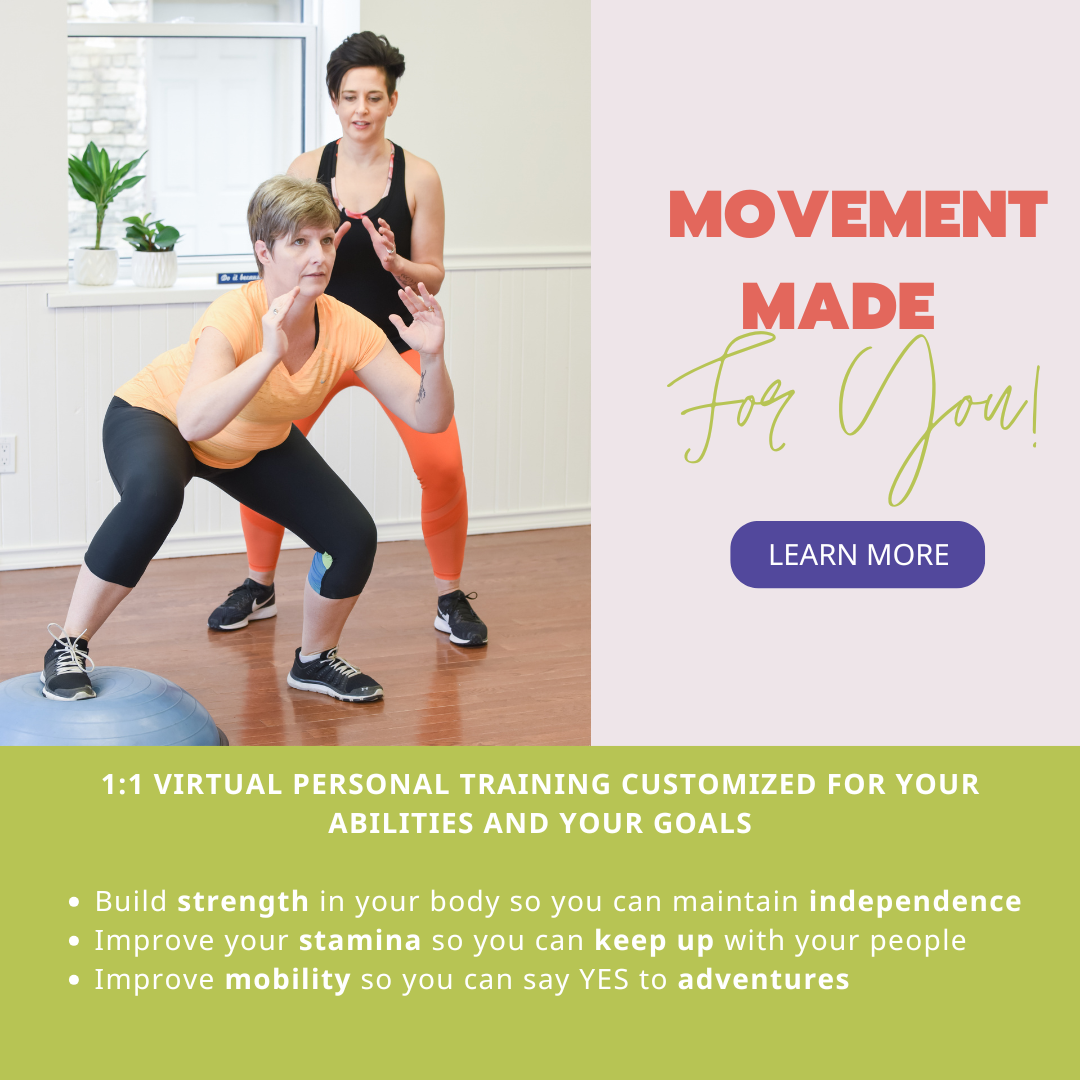
If you’re tired of starting over and ready to build strength in a way that respects your body, your energy, and your real life, Movement Made for You was designed with you in mind.
This 1:1 coaching experience is fully personalized, weight‑neutral, and supportive—especially for women who’ve felt like traditional fitness spaces weren’t built for them. Together, we focus on realistic goals, meaningful progress, and small wins that actually last.
👉 Book a free consultation and let’s start building your fitness habit—one supportive step at a time.

Radiant Vitality – Kim Hagle
Body Positive Personal Trainer for Women Over 40. Located in Goderich, ON and serving clients online throughout North America
Check Out Our Latest Posts
-

Body Positive Fitness: A Guide for Women Who’ve Been Burned by Fitness Culture
Body positivity in fitness isn’t a trend, a marketing buzzword, or a softer way of selling you the same old fitness culture nonsense. It’s a completely different way of thinking about movement — one where your body doesn’t have to earn the right to exist in a gym, in workout clothes, or in a class…
-

I’m Scared to Go to the Gym Because of My Size
If you’ve ever typed “I’m scared to go to the gym because of my size” into a search bar at midnight, this post is for you. I’m not going to tell you to push past your fear or give you a pep talk about confidence. I’m going to tell you something the fitness industry has…
-

How to Be Consistent with Exercise (Without Burning Out or Starting Over)
If you’ve been trying to figure out how to be consistent with exercise, and feeling like you’re the only one who can’t seem to make it work, this is for you. Not because you need more motivation or a stricter plan. But because after 15 years as a personal trainer, I can tell you with…


0 Comments