
6 Ways to Start Strength Training Safely When You Live with Chronic Pain
If you live with chronic pain, chances are you’ve had mixed messages about exercise.
Maybe you’ve been told that movement will help… but every time you try a workout, you end up exhausted, flared up, or feeling like your body has betrayed you.
Or maybe you’ve avoided strength training altogether because traditional fitness spaces make it seem like you need to go hard, push through pain, or already be “fit enough” before you begin.
If that’s been your experience, I want you to know something:
Strength training with chronic pain can be safe. And for many people, it can actually help improve daily life.
The key is learning how to approach movement in a way that works with your body instead of against it.
As someone who lives with chronic pain myself — and who works with lots of “fitness misfits” who felt excluded from traditional fitness culture — I’ve seen firsthand that strength training does not need to be punishing to be effective.
Let’s talk about how to get started safely.
Why Strength Training Can Help Chronic Pain
When people hear “strength training,” they often picture intense bootcamp workouts or lifting heavy weights in a crowded gym.
But strength training can simply mean helping your body become more supported, stable, and capable in everyday life. Research has shown that appropriately paced strength training may help improve pain, quality of life, physical function, and fatigue for many people living with fibromyalgia and chronic pain conditions. 1
For many people, gentle movement and low impact strength training may help:
- improve mobility and balance
- support joints
- increase stamina
- reduce fear around movement
- make daily tasks feel easier
- build confidence and independence
And contrary to what many people believe, complete rest isn’t always the answer for chronic pain conditions. In many cases, carefully paced movement can help the body tolerate activity more comfortably over time.
That doesn’t mean you need to ignore your symptoms or “push through” pain. It means finding safe exercise for chronic pain that feels sustainable and supportive.
This is especially important for people navigating conditions like fibromyalgia, arthritis, hypermobility, chronic fatigue, or persistent pain conditions where all-or-nothing exercise approaches often backfire.
1. Start with Gentle, Low Impact Strength Training
One of the biggest mistakes people make when starting beginner strength training for chronic pain is assuming they need to do more than their body is ready for. Reviews of exercise therapy for fibromyalgia also suggest that low-intensity, gradually progressed exercise tends to be the most tolerable and sustainable approach. 2
You do not need:
- hour-long workouts
- burpees
- jumping exercises
- heavy lifting
- complicated gym routines
In fact, starting smaller is often the smarter choice.
Low impact strength training can include:
- seated exercises
- resistance bands
- bodyweight movements
- light dumbbells
- slower, controlled movements
Short workouts can still be effective. Sometimes 10–20 minutes done consistently is far more helpful than one “all in” workout that leaves you in a flare for the next three days.
Your goal in the beginning isn’t to crush yourself.
Your goal is to build trust with your body again.
2. Learn the Difference Between Discomfort and Pain
This can be one of the hardest parts of exercise with chronic pain.
Because when you live with pain regularly, it can be difficult to know:
- What’s normal?
- What’s too much?
- What should you stop for?
A little muscle fatigue or mild soreness can be a normal part of strength training.
But sharp pain, escalating symptoms, dizziness, joint instability, or pain that lingers intensely for days afterward are signs your body may need a different approach.
Safe exercise for chronic pain isn’t about ignoring your body’s signals.
It’s about learning to respond to them.
That might mean:
- reducing range of motion
- lowering weight
- slowing down
- taking longer rest periods
- shortening the workout
- swapping exercises entirely
Adjusting doesn’t mean you failed.
It means you’re training smart.
3. Use Strength Training Modifications That Work for Your Body
Modifications are not “cheating.”
They are one of the best tools for making movement more accessible and sustainable.
Unfortunately, traditional fitness culture often treats modified exercises like they’re “less than.”
But for many people with chronic pain, modifications are what make consistency possible. Many people with chronic pain discover that exercise tolerance can vary widely from person to person, which is why pacing and individualized approaches matter so much.3
Examples of helpful strength training modifications might include:
- wall pushups instead of floor pushups
- seated shoulder presses
- smaller ranges of motion
- slower tempos
- using one dumbbell instead of two
- holding onto a chair for balance
- reducing repetitions
Your body does not need to exercise exactly like someone else’s body in order to benefit.
One of the most empowering things about beginner strength training for chronic pain is realizing you’re allowed to adapt movement to you.
4. Start Slower Than You Think You Need To
If you live with chronic pain, there’s a good chance you’ve experienced the cycle of:
- feeling motivated
- doing too much on a “good day”
- crashing afterward
This is incredibly common.
When learning how to start strength training safely, pacing matters.
A lot.
Instead of asking:
“How hard can I push today?”
Try asking:
“What amount feels manageable enough that I could do it again tomorrow or later this week?”
That shift changes everything.
Consistency builds strength more effectively than occasional intense workouts.
It’s okay if your starting point looks small.
Small and sustainable is still progress.
5. Track Your Workouts and Symptoms to Find Your “Sweet Spot”
One of the most helpful things you can do when learning how to start strength training safely is to track how your body responds to movement.
Because with chronic pain, it’s not always obvious in the moment whether an activity was helpful, manageable, or too much until later.
Keeping simple notes can help you identify your personal “sweet spot” — the amount and type of movement your body tends to tolerate best.
You don’t need anything fancy.
A notebook, phone notes app, or printable tracker works perfectly.
Try tracking:
- what type of workout you did
- how long the workout lasted
- the intensity level
- how your body felt during the workout
- how you felt later that day
- how you felt the next day
Over time, patterns often start to emerge.
You may notice:
- certain exercises feel energizing while others trigger flare-ups
- shorter workouts work better than longer ones
- you need more recovery time after higher intensity days
- strength training feels better in the afternoon than the morning
- certain movements consistently increase pain
This information can help you make decisions based on your actual lived experience instead of generic fitness advice.
It can also be helpful to use a pain or energy scale to decide whether to modify, shorten, or skip a workout on higher symptom days.
I outlined how to do this in a previous blog post.
Tracking is not about obsessing over your body.
It’s about building self-awareness, pacing more effectively, and learning how to work with your body instead of constantly fighting it.
6. Choose a Supportive Environment for Exercise with Chronic Pain
Sometimes the biggest barrier to movement isn’t your body.
It’s the environment.
Many traditional fitness spaces can feel:
- intimidating
- inaccessible
- appearance-focused
- overly intense
- dismissive of chronic pain realities
That’s why finding a supportive, adaptable environment matters so much.
Look for spaces and coaches that:
- encourage modifications
- focus on function over punishment
- welcome beginners
- understand chronic illness and flare-ups
- avoid “no pain, no gain” messaging
- support bodies of all sizes and abilities
You deserve movement spaces where you feel safe, respected, and encouraged — not judged.
That’s exactly why I created programs for fitness misfits who never felt like they belonged in traditional fitness culture.
Common Questions About Strength Training with Chronic Pain
Can strength training make chronic pain worse?
It can if the approach is too intense, progresses too quickly, or ignores your body’s limits. But appropriately paced strength training with chronic pain can often help improve function, mobility, and confidence over time.
Is it okay to exercise during a flare-up?
Sometimes gentle movement can help, but it depends on the severity of the flare and your individual condition. During higher symptom days, you may need shorter workouts, gentler exercises, extra rest, or complete rest.
What’s the best type of exercise for chronic pain?
The best exercise is usually the one that feels sustainable, adaptable, and realistic for your life and body. Low impact strength training is often a great option because it can be modified easily and progressed gradually.
How often should beginners strength train?
For many beginners with chronic pain, starting with 1–3 short sessions per week is plenty. More is not always better.
You Don’t Need to “Push Through” to Get Stronger
One of the biggest myths in fitness is that exercise only “counts” if it’s intense.
But strength can be built gently.
Safely.
Gradually.
You do not need to punish your body to care for it.
If you’re curious about trying strength training in a way that feels supportive and beginner-friendly, I’d love to help.
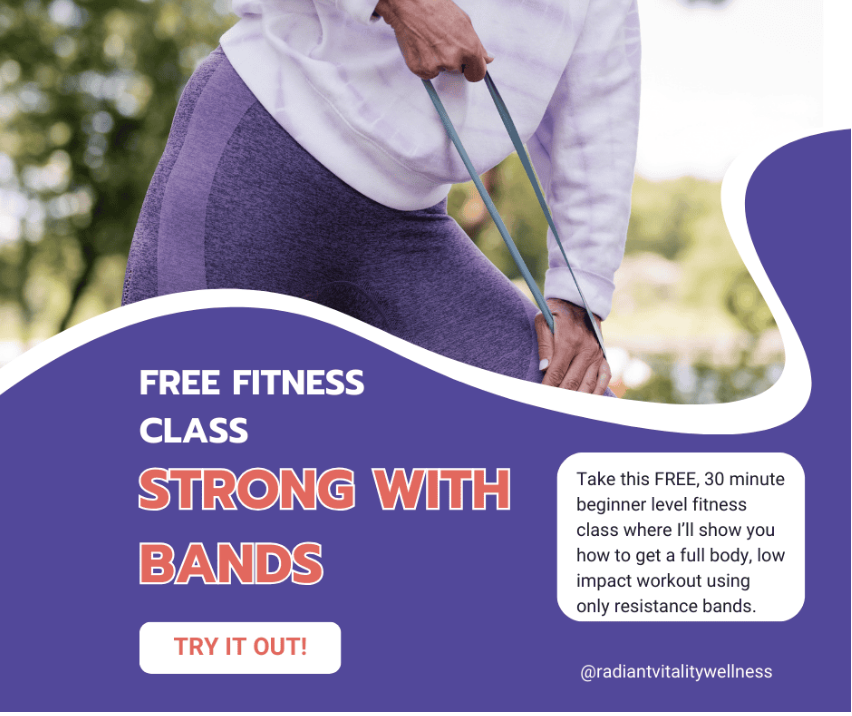
You can start with my free bands class. Strong with Bands — a gentle introduction to strength training using resistance bands in a way that feels approachable and doable.
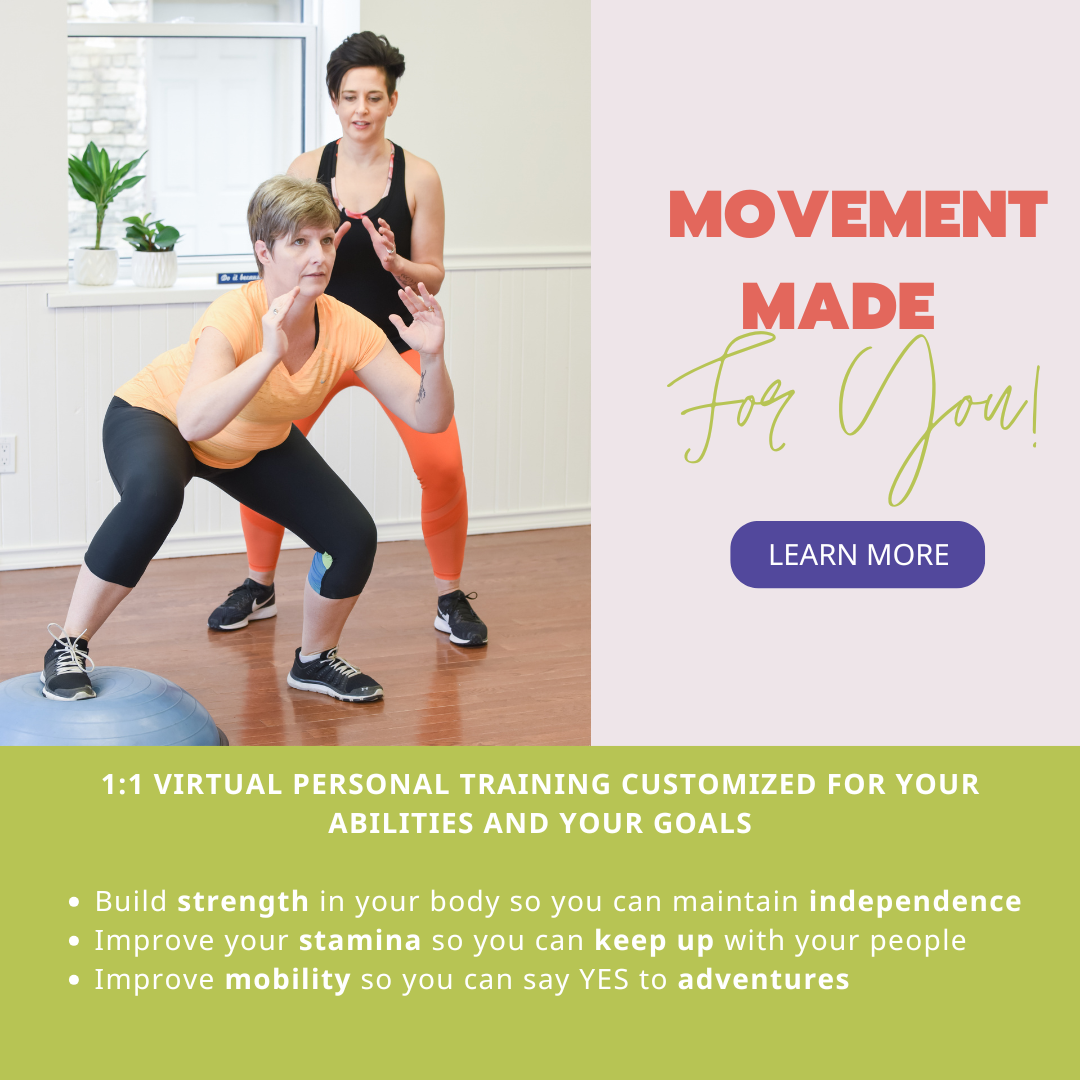
And if you’re looking for more personalized support, my program, Movement Made for You was created specifically for fitness misfits who want to feel stronger without diet culture, intimidation, or all-or-nothing fitness pressure.
Because movement should help you feel more at home in your body — not more disconnected from it.

Radiant Vitality – Kim Hagle
Body Positive Personal Trainer for Women Over 40. Located in Goderich, ON and serving clients online throughout North America
Check Out Our Latest Posts
-
How To Find The Motivation To Workout: 7 Ways To Finally Stay Consistent With Exercise
If you’ve been trying to figure out how to find the motivation to workout, you’re not alone; and you’re not broken. In my 15 years as a body-positive personal trainer, lack of motivation is the single most common reason people struggle to start or stay consistent with exercise. But here’s what most fitness advice gets…
-

Is Strength Training Safe If You Have Chronic Pain?
Wondering if strength training with chronic pain is actually safe? The short answer is yes — when it’s approached in a way that works with your body instead of against it. In this article, you’ll learn how to start strength training safely when living with chronic pain, fibromyalgia, fatigue, or mobility limitations. We’ll cover beginner-friendly…
-
How to Stay Consistent with Exercise in Perimenopause (A Minimum Baseline Approach)
If you’re struggling to stay consistent with exercise in perimenopause, this post introduces a more sustainable approach. Learn how setting a realistic minimum baseline can help you avoid burnout, support your hormones, and build long-term strength and consistency—without all-or-nothing pressure.





0 Comments