Resistance Bands vs Weights for Beginners: Which Is Better to Start With?

by | Feb 19, 2026

If you’re new to strength training, it’s very common to feel stuck on one big question:

Should I be using resistance bands or weights?

Maybe you’ve heard that “real” strength training means dumbbells.
Or maybe weights feel intimidating, painful, or like too much too soon.

The truth is, both resistance bands and weights can build strength — but they don’t feel the same, and they don’t meet beginners in the same way.

In this post, we’ll compare resistance bands vs weights for beginners so you can decide what makes the most sense for your body, your needs, and where you’re starting from.


Resistance Bands vs Weights for Beginners: The Big Picture

Strength training isn’t about choosing the “best” tool.
It’s about choosing a tool that helps you:

  • Feel safe
  • Build confidence
  • Stay consistent

For beginners, especially those returning to movement after a long break, living with chronic pain, or navigating perimenopause, how strength is loaded into the body matters just as much as what you’re lifting.

That’s where the difference between bands and weights becomes important.


Resistance Bands: Pros and Cons for Beginners

Pros of Resistance Bands

  • Low impact and joint-friendly
    Resistance bands provide smooth, gradual tension, which reduces joint strain and allows for more controlled movement — a big plus for beginners.
  • Easy to adjust intensity
    You can make an exercise easier or harder simply by changing band tension, stance, or range of motion.
  • Less intimidating
    Bands tend to feel more approachable than picking up weights, especially if you’ve had negative fitness experiences in the past.
  • Great for at-home workouts
    They’re compact, affordable, and don’t require a gym or large setup.
  • Encourage slow, controlled movement
    This helps beginners learn good movement patterns without rushing or “muscling through.”

Cons of Resistance Bands

  • They can feel unfamiliar at first
  • Resistance is harder to quantify than a numbered weight
  • There can be a short learning curve for setup and positioning

Weights (Dumbbells): Pros and Cons for Beginners

Pros of Weights

  • Clear, measurable load
    A 10-lb dumbbell is always a 10-lb dumbbell, which can feel straightforward and reassuring.
  • Simple concept
    Pick up the weight, put it down. There’s comfort in familiarity.
  • Excellent for long-term progression
    Weights are very effective once someone has a foundation of strength and confidence.

Cons of Weights

  • Higher joint load
    Weights place more direct force on joints, which can be challenging for beginners or people with pain or mobility limitations.
  • Less forgiving of form
    Poor technique with weights can lead to discomfort or injury more easily.
  • Can feel intimidating
    Many beginners associate weights with gym culture, comparison, or “pushing harder.”

A table that compares Resistance bands vs weights for beginners

So… Resistance Bands or Weights for Beginners?

Here’s the honest answer:

The best choice is the one that helps you start — and keep going.

For many beginners:

  • Resistance bands feel safer
  • They allow more control
  • They reduce fear of injury
  • They build confidence faster

That doesn’t mean weights are “bad.”
It simply means that bands are often a more supportive entry point, especially if your body needs a gentler approach.

Many people eventually use both — but starting with bands can make that transition feel easier and more sustainable.


Want to Experience Beginner-Friendly Strength Training?

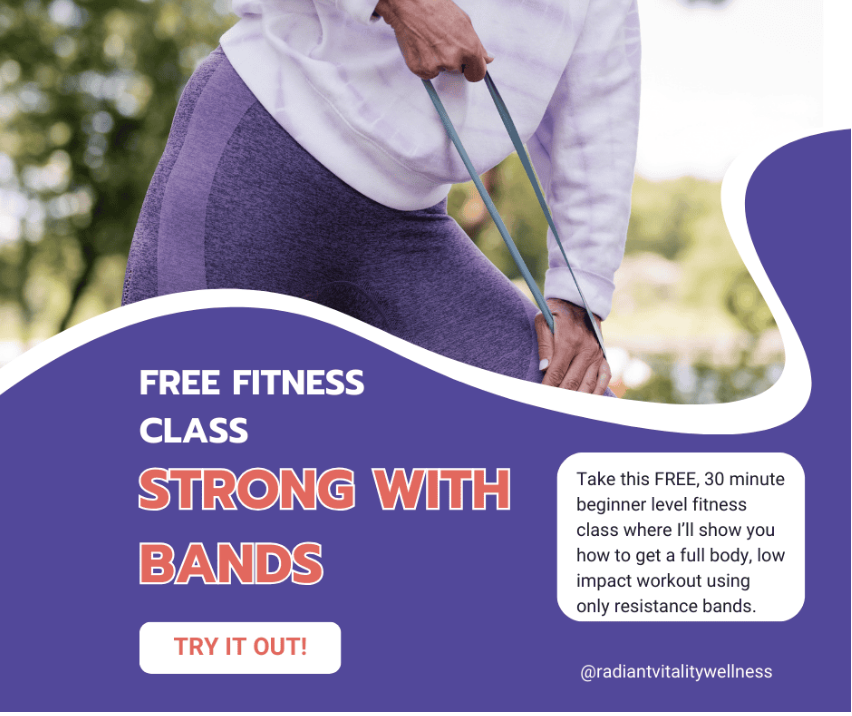
If you’re curious what this actually feels like in your body, I’m hosting a free Strong With Bands class where I’ll guide you through a beginner-friendly resistance band workout step by step.

This class is designed for people who:

  • Are new to strength training or starting again
  • Want low-impact, joint-friendly movement
  • Don’t want to push through pain or overwhelm

You don’t need to be “fit.”
You don’t need to have it all figured out.
You just need curiosity.


Final Thoughts: Resistance Bands vs Weights for Beginners

Strength training isn’t about proving anything.
It’s about building a relationship with your body that feels supportive and sustainable.

For many beginners, resistance bands offer a safer, more approachable place to start — and that matters.

If you’ve been on the fence, the Strong With Bands class is a great way to experience it for yourself.

Kim Hagle - Body Image Coach - Size Inclusive Fitness Specialist - Non Diet Nutritionist

Radiant Vitality – Kim Hagle

Body Positive Personal Trainer for Women Over 40. Located in Goderich, ON and serving clients online throughout North America

Check Out Our Latest Posts

  • How To Find The Motivation To Workout: 7 Ways To Finally Stay Consistent With Exercise

    How To Find The Motivation To Workout: 7 Ways To Finally Stay Consistent With Exercise

    If you’ve been trying to figure out how to find the motivation to workout, you’re not alone; and you’re not broken. In my 15 years as a body-positive personal trainer, lack of motivation is the single most common reason people struggle to start or stay consistent with exercise. But here’s what most fitness advice gets…

  • Is Strength Training Safe If You Have Chronic Pain?

    Is Strength Training Safe If You Have Chronic Pain?

    Wondering if strength training with chronic pain is actually safe? The short answer is yes — when it’s approached in a way that works with your body instead of against it. In this article, you’ll learn how to start strength training safely when living with chronic pain, fibromyalgia, fatigue, or mobility limitations. We’ll cover beginner-friendly…

  • How to Stay Consistent with Exercise in Perimenopause (A Minimum Baseline Approach)

    How to Stay Consistent with Exercise in Perimenopause (A Minimum Baseline Approach)

    If you’re struggling to stay consistent with exercise in perimenopause, this post introduces a more sustainable approach. Learn how setting a realistic minimum baseline can help you avoid burnout, support your hormones, and build long-term strength and consistency—without all-or-nothing pressure.

Hey Gorgeous, I'm Kim (she/her)

I’m a body positive personal trainer for women over 40 who feel like “fitness misfits”.

It’s my mission to make the life changing benefits of movement available to ALL bodies, especially those who feel like they don’t “fit” in fitness spaces.

Kim Hagle - Body Positive Personal Trainer for Women over 40

Thanks for Visiting the Radiant Vitality Blog

Kim Hagle  is a body positive personal trainer, body image coach and founder of Radiant Vitality Wellness.

She offers customized personal training, in person group fitness classes, online fitness programs and body image coaching services  in Goderich, ON  and virtually across North America.

Kim holds a BScN and is an ACE certified personal trainer.  She is also a size inclusive fitness specialist, and a certified health and life coach specializing in Body Image.  You can read more about Kim here.

Follow Radiant Vitality on Social

0 Comments

Check Out Our Recent Posts

How To Find The Motivation To Workout: 7 Ways To Finally Stay Consistent With Exercise

If you’ve been trying to figure out how to find the motivation to workout, you’re not alone; and you’re not broken. In my 15 years as a body-positive personal trainer, lack of motivation is the single most common reason people struggle to start or stay consistent with exercise.

But here’s what most fitness advice gets wrong: the strategies typically used to improve exercise motivation (accountability challenges, strict programs, “no excuses” mantras) often make the problem worse.

The real issue isn’t that you don’t know how to motivate yourself to work out. It’s that the fitness industry has been pointing you in the wrong direction entirely.

In this post, I’m sharing 7 evidence-backed, body-positive strategies to help you:

Overcome lack of motivation to exercise once and for all

Build a movement habit that fits your real life

Shift from dreading workouts to actually wanting to move.

Is Strength Training Safe If You Have Chronic Pain? 6 Ways to Start Strength Training Safely When You Live with Chronic Pain

Is Strength Training Safe If You Have Chronic Pain?

Wondering if strength training with chronic pain is actually safe? The short answer is yes — when it’s approached in a way that works with your body instead of against it.
In this article, you’ll learn how to start strength training safely when living with chronic pain, fibromyalgia, fatigue, or mobility limitations. We’ll cover beginner-friendly strategies like low impact strength training, pacing, using modifications, and learning the difference between productive discomfort and pain that signals your body needs something different.
You’ll also discover why tracking workouts and symptoms can help you identify your personal “sweet spot” with movement, making it easier to exercise consistently without triggering unnecessary flare-ups.
This post is designed for fitness misfits who feel intimidated, excluded, or discouraged by traditional fitness culture and want a more compassionate, sustainable approach to exercise.
Whether you’re brand new to movement or trying to rebuild trust with your body after years of pain, this guide will help you approach strength training with more confidence, flexibility, and self-compassion — without the “no pain, no gain” mindset.

Struggling with exercise consistency in perimenopause? Learn how a minimum baseline approach can help you stay consistent, reduce burnout, and build sustainable strength.

How to Stay Consistent with Exercise in Perimenopause (A Minimum Baseline Approach)

If you’re struggling to stay consistent with exercise in perimenopause, this post introduces a more sustainable approach. Learn how setting a realistic minimum baseline can help you avoid burnout, support your hormones, and build long-term strength and consistency—without all-or-nothing pressure.

Do You Need To Get In Shape Before Hiring a Personal Trainer - 5 Honest Answers

Do You Need to Get in Shape Before Hiring a Personal Trainer?

Thinking about hiring a personal trainer but feel like you need to get in shape first? You’re not alone. In this post, we break down five key points to help you understand what personal training really is —and who it’s actually for. (Hint: it’s not just athletes or already-fit people.) You’ll learn why starting with support can make things easier, safer, and more sustainable, especially if you’re feeling out of shape or unsure where to begin. If hiring a personal trainer has been on your mind, this guide will help you take that first step with confidence.

5 Ways to Start Strength Training When You Feel Completely Out of Shape

5 Ways to Start Strength Training When You Feel Completely Out of Shape

In 5 Ways to Start Strength Training When You Feel Completely Out of Shape, you’ll learn how to begin in a way that actually feels doable. If you’re feeling overwhelmed, out of shape, or unsure where to start, this guide breaks it down into five simple, realistic steps. From starting smaller than you think to choosing movements that feel safe and supportive, you’ll build strength, confidence, and consistency without pressure or perfection. This beginner-friendly approach is especially helpful if you’re returning after a long break or managing pain, helping you create a sustainable strength training routine that fits your life.

A person working out with a long resistance band with support from a trainer. Text box reads "Are resistance bands good for beginners. 5 reasons why they're the perfect place to start"

Are Resistance Bands Good for Beginners? 

Resistance bands are an excellent choice for beginners who want to build strength without intimidation or high-impact workouts. They’re versatile enough for full-body strength training, affordable, and easy to use at home with minimal space. Resistance bands are also joint-friendly, making them a great option for people with chronic pain, mobility limitations, or those returning to exercise after a break. With multiple resistance levels, they allow beginners to progress at their own pace. This post explains five reasons resistance bands are good for beginners, outlines the most common types of bands, and shares how to try a beginner-friendly band workout.

Small Fitness Wins: How Tiny Steps Build Lasting Strength

Small Fitness Wins for Women Over 40: How Tiny Steps Build Lasting Strength

Lasting fitness success isn’t built through dramatic transformations or all-or-nothing effort—it’s built through small, consistent actions over time. For women over 40, especially those navigating busy lives, chronic pain, or years of frustrating fitness experiences, focusing on small fitness wins can be the key to building habits that actually stick.
This article explores how small wins—like adding one extra set, moving for five more minutes, or choosing rest when your body needs it—create meaningful progress without burnout. Instead of relying on the scale, it highlights powerful non-scale victories such as improved energy, better sleep, stronger joints, and increased confidence. These changes often show up long before visible results, yet they’re the foundation of sustainable strength and mobility.
You’ll also learn practical ways to track progress that support motivation rather than shame, and how shifting away from perfectionism can transform your relationship with movement. By celebrating what your body can do today, you build momentum that carries you forward—one small, achievable step at a time.

The Best Way to Work Out with Chronic Pain (without making it worse)

The Best Way to Work Out With Chronic Pain (Without Making It Worse)

Discover a balanced, evidence-informed way to exercise with chronic pain. This guide breaks down why movement helps, how to structure your week, and how to stay consistent without making pain worse.

Strength Training for Beginners Over 40: How to Start Without Hurting Yourself

Strength Training for Beginners Over 40: How to Start Without Hurting Yourself

Strength training after 40 can feel intimidating — especially if you’re worried about injury. This beginner-friendly guide explains how to start safely, build strength gradually, and support your body instead of pushing it too hard.

How to Set Fitness Goals After 40 (that actually stick without "no pain, no gain")

How to Set Fitness Goals After 40 (That Actually Stick Without “No Pain, No Gain”)

Learning how to set fitness goals after 40 requires a different approach—one that respects your body, your energy, and your real life. In this post, you’ll learn how to create fitness goals that actually stick, without shame, extremes, or punishing workouts. We’ll explore a smarter, self-aligned way to build consistency, motivation, and strength—especially if traditional fitness culture has never felt like it was made for you.