

Body positivity in fitness isn’t a trend, a marketing buzzword, or a softer way of selling you the same old fitness culture nonsense. It’s a completely different way of thinking about movement — one where your body doesn’t have to earn the right to exist in a gym, in workout clothes, or in a class full of strangers.
If you’ve ever walked into a fitness space and immediately felt like you didn’t belong there — too big, too untrained, too much of a beginner, just too much — this guide is for you. We’re going to name exactly what’s been wrong with the spaces you’ve tried, what body positive fitness actually looks like instead, and how to find (or build) a relationship with movement that doesn’t require you to shrink, fix, or apologize for your body first.
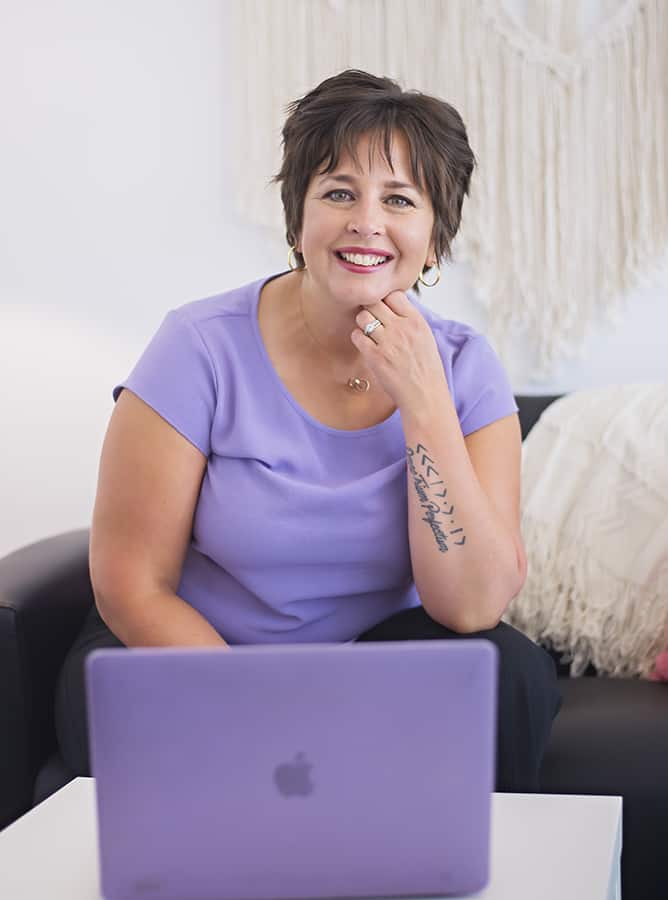
I’m Kim, a body positive personal trainer, non-diet health coach, and body image coach — and I’m also a fitness misfit myself. I was the kid picked last for teams. I live with chronic illness and pain. I’ve been through my own disordered relationship with exercise and come out the other side. Part of my training as a size-inclusive fitness specialist is learning to notice the things most people walk right past — the subtle (and not-so-subtle) ways fitness spaces tell certain bodies they don’t belong. That’s exactly what we’re digging into here.
What I See Over and Over Again
Here’s something I’ve witnessed more times than I can count in my career, in gym after gym, studio after studio.
Walk into almost any fitness space and look at the imagery on the walls, in the brochures, on the website. It’s fitness models. Lean, toned, usually young, usually able-bodied. Rarely — if ever — a body that looks like the one you’re standing in.
Then look at the floor itself. Equipment crammed so tightly together that someone in a larger body physically cannot move between the machines without turning sideways, without apologizing, without feeling every set of eyes on them as they navigate a space that wasn’t built with their body in mind.
Then watch a class. An instructor demonstrates a move — maybe a high plank, maybe a deep twist, maybe something that requires you to fold your torso in half — with zero acknowledgment that this exact movement is physically impossible, or at minimum deeply uncomfortable, for a body with a belly and boobs in the way. No modification offered. No “here’s another option.” Just the assumption that everyone in the room has the same body, and if yours doesn’t fit the mold, that’s your problem to solve quietly, on your own, or not at all.
As a size-inclusive fitness specialist, I’m trained to notice these things. It’s not an accident when I walk into a space and immediately clock the equipment spacing, the imagery, the cueing. It’s a skill I’ve built specifically so I can create something different — a space and a programming style where every body is actually considered, not an afterthought.
This is the water most of us have been swimming in for so long we don’t even register it as strange anymore. But it is strange. And it’s the reason so many women write off fitness entirely, not because they don’t want to move their bodies, but because every space they’ve tried has made it clear their body wasn’t the one it was designed for. And the research backs this up: people in larger bodies regularly describe excluding themselves from gyms and exercise settings entirely, specifically to avoid the judgment and stigma they’ve already experienced there — a well-documented pattern researchers call weight-stigma-induced self-exclusion.
What Body Positivity In Fitness Actually Means (And What Toxic Fitness Culture Got Wrong)
Let’s get specific, because “body positive” gets slapped on a lot of things that don’t actually earn it.
First, let’s clear up a common misconception: body positivity isn’t about loving your body. It never required that, and it’s not the goal. Some days you’ll feel neutral about your body. Some days you might not feel great about it at all — and that’s human, not a failure of positivity. What body positive fitness actually asks of you is simpler and more sustainable: respect. Treating the body you’re in right now with kindness. Choosing movement that helps you feel and function better — not movement designed to punish your body into looking different.

Body positive fitness means movement that starts from the belief that your body is not a before photo. It is not a project, a problem, or a work in progress waiting to be fixed. It’s the body you live in right now, today — and it deserves to move, exactly as it is.
Practically, that means:
- No weigh-ins, no body measurements, no size-based progress tracking
- Programming built around what your body can do and how it wants to feel — not around changing its shape
- Modifications offered as standard practice, not as a special accommodation you have to ask for
- Language that never implies your body needs fixing, shrinking, or earning anything
- A focus on functional goals — improved strength, endurance, and mobility — measured by things that actually show up in your life: carrying the groceries in one trip, getting up off the floor without thinking about it, keeping up on a hike. Not pounds. Not inches. If you want a deeper look at what “progress” can mean when it’s got nothing to do with the scale, here’s our full breakdown of non-scale victories.
Here’s the one that trips people up most: body positive fitness is not the same as “fitness, but with nicer marketing.” A gym can put a plus-size model in one Instagram post and still have equipment you can’t move through, instructors who only demo one version of every exercise, and a culture that quietly rewards weight loss talk in the group chat. Body positivity in fitness has to show up in the actual experience, not just the brand voice.
And here’s the thing worth sitting with: no pain. That’s it. “No pain, no gain” is a lie that’s kept too many women on the sidelines for decades. Movement should feel good in your body. That is the entire point. If a workout only “counts” when it hurts, something in that workout — or that philosophy — needs to change, not your body.
Body Positivity vs. Fitness Culture
Let’s name the thought error directly, because I think a lot of women carry it around without ever saying it out loud: fitness culture and body positive fitness are not the same thing, and most of us were only ever introduced to the former.
Mainstream fitness culture is built on a simple, unspoken premise: your body is a problem to solve. Every program, every challenge, every “transformation” is sold as the thing that will finally fix you. You’ll hear about 12-week challenges promising to change your life. You’ll see before-and-after photos positioned as the whole point of showing up. You’ll be told there are no excuses — as if your chronic pain, your caregiving responsibilities, your exhaustion, your actual life, are just obstacles standing between you and the body you’re supposed to want.
Body positive fitness rejects all of that, on purpose.
It says: all bodies are good bodies, right now, without a transformation required. It says: you work out to feel better, not to look different — strength, energy, ease, confidence, joy are yours to claim, and the scale has nothing to do with any of it. It says: there are no excuses, because you never needed one in the first place. Life isn’t an obstacle to your movement — life is the reason you deserve to feel strong and at home in your body.
This isn’t just a kinder philosophy. It’s also the one backed by what we actually know about sustainable behaviour change: restriction-based, shame-based approaches reliably fail long-term, while movement that feels good and respects your body’s signals is the kind people actually keep doing. In fact, clinical research on weight-neutral, HAES-aligned interventions has found real improvements in eating attitudes, body image, and physical capacity — without the body size or shape changes mainstream fitness culture insists are the only valid outcome.
Still trying to untangle what “healthy” actually means for you —
beyond the scale, beyond the conflicting advice?
My free guide, Breaking Free: Real Health Beyond the Scale,
walks you through what health can look like
when you stop measuring it in pounds.
Signs a Gym Isn’t Body Positive
Some red flags are loud. Most are quiet — which is exactly why so many of us internalize them instead of naming them. Here’s what to watch for:

Rest or modification treated as failure. Watch the language around taking a break, scaling down, or sitting a rep out. If it’s framed as giving up rather than a completely valid choice, that’s fitness culture, not body positivity.
The imagery. If every photo on the wall, website, or social feed features the same narrow body type, that’s telling you who the space was designed for — and it isn’t everyone.
The equipment layout. Can you physically move between machines without turning sideways or asking someone to shift? Tight spacing isn’t a neutral design choice. It’s a sign larger bodies weren’t considered when the floor plan was built.
One-size-fits-all cueing. If an instructor demonstrates a move and offers zero modifications, zero “here’s another way to do this,” that’s a space that expects you to already fit the mold rather than meet you where you are.
Before/after marketing. Transformation photos, “progress” framed purely as weight loss, success stories that all sound the same — this is fitness culture wearing gym clothes.
Weigh-ins and measurements as a default. If your “membership experience” includes getting weighed or measured, that’s a values signal worth paying attention to.
Rest or modification treated as failure. Watch the language around taking a break, scaling down, or sitting a rep out. If it’s framed as giving up rather than a completely valid choice, that’s fitness culture, not body positivity.
If you’ve ever felt intimidated walking into a gym before you even got through the door — you’re not imagining it, and you’re not alone. Read more here: I’m Scared to Go to the Gym Because of My Size — that fear is usually a completely accurate read of a space that wasn’t built with you in mind, not a flaw in you.
How to Tell If a Personal Trainer Is Body Positive
A trainer’s Instagram bio can say “body positive” and mean almost nothing. Here’s what to actually look for — and what to ask — before you hand someone your trust (and your money).
Ask directly:
- “Do you do weigh-ins or measurements as part of your process?” (The answer should be no.)
- “How do you handle modifications if a move doesn’t work for my body?”
- “What does success look like in your programming?” (Listen for strength, energy, and function — not weight loss.)
Watch for:
- Whether they ask about your pain, your energy, your life — not just your “goals” in the fitness-industry sense
- Whether they offer options before you have to ask for them
- Whether their language focuses on what your body can do, not what it should look like
- Whether rest and modification are presented as valid choices, not consolation prizes
A body positive trainer should leave you feeling capable after a session — not smaller, not “good” for suffering through it, not like you owe your body an apology for how it moved today.
What Body Positive Exercise Actually Looks Like

This is the part that tends to surprise people, because it’s less about a specific workout style and more about a completely different relationship to the whole thing.
It’s modification-aware by default. Every move has an easier option, a harder option, and permission to pick whichever one feels right that day — without explanation required.
It follows “all or something,” not all or nothing. A 10-minute walk counts. A gentle stretch counts. Listening to your body — even when that means doing less than you planned — counts most of all. There is no minimum threshold your effort has to clear before it’s allowed to matter.
It drops the pain requirement entirely. No pain. That’s it. If a workout leaves you in genuine discomfort rather than the normal sensation of effort, that’s information, not a badge of honour.
It’s not on a 12-week clock. Sustainable movement isn’t a challenge you complete — it’s a relationship you build slowly, imperfectly, and on your own terms. There’s no finish line where the “real” results are supposed to appear.
It’s measured in how you feel, not how you look. Energy. Ease getting through your day. Strength to carry the thing, climb the stairs, play with the kids or grandkids. Consistency and motivation both get a lot easier once the goalpost stops being a number on a scale. For more on that: How to Be Consistent With Exercise and How to Find the Motivation to Workout.
And here’s one more thing worth naming: body positive movement makes room for non-scale victories to actually count as progress — not as a consolation prize while you wait for the “real” win. Sleeping better. Getting off the floor without thinking about it. Feeling steadier on a hike. Read the full post: What Is a Non-Scale Victory? These aren’t secondary benefits. In a body positive approach, they’re the whole point.
Every body deserves the life-changing benefits of movement — not just young bodies, thin bodies, able bodies, or bodies the fitness industry has decided are “motivated enough.” Every single body. Full stop.
What This Means for You
If you’ve been burned by fitness culture before — made to feel like your body was the problem, like you needed to earn your place in a gym, like rest was failure — none of that was ever about your worth or your effort. It was about spaces and programs that were never built with you in mind in the first place.
Body positive fitness isn’t softer or lesser. It’s just honest about what actually helps people build a lasting relationship with movement: respect, modification, and the freedom to work out to feel better, not to look different.
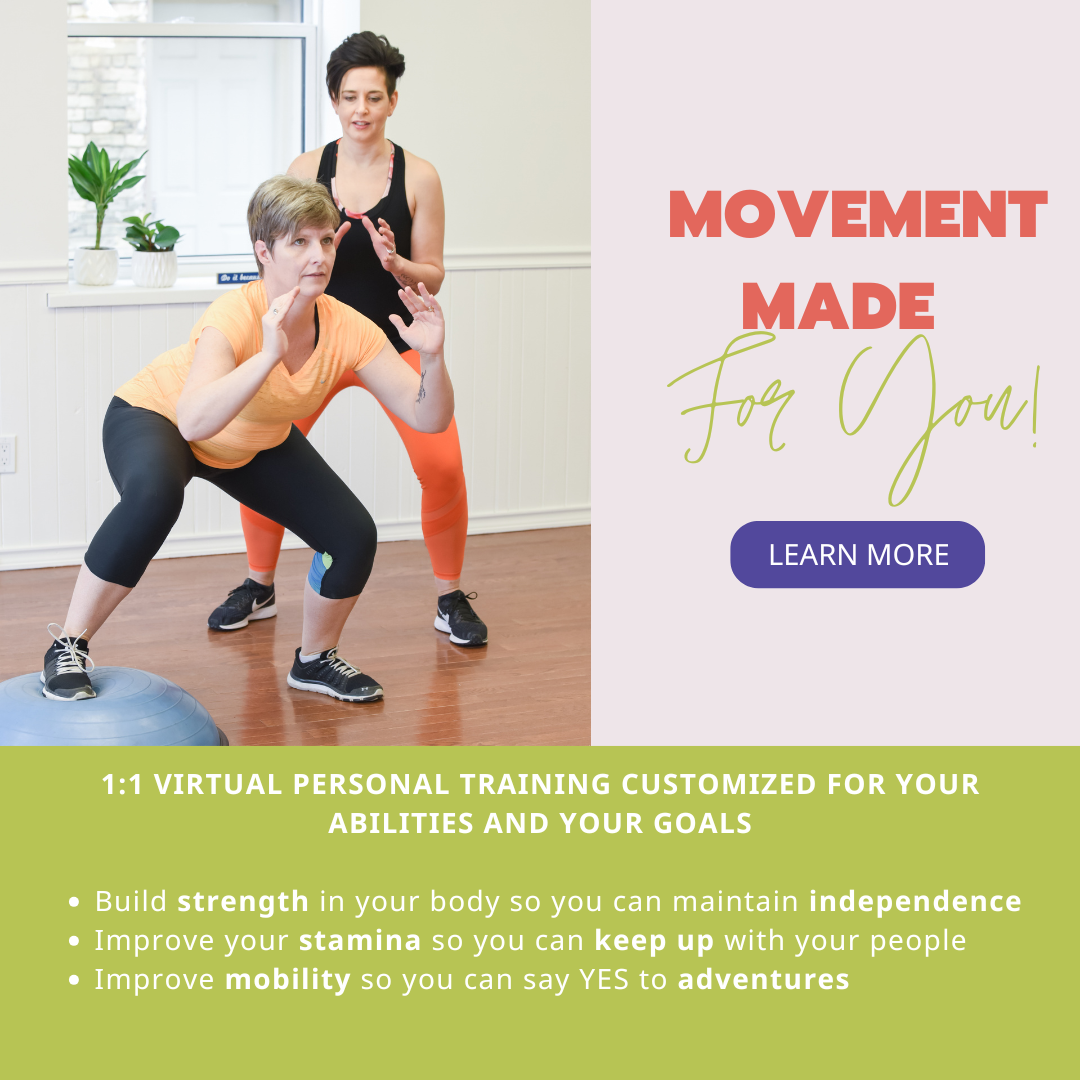
If you’re ready to work with someone who’s actually trained to build that kind of space — equipment you can move through, cueing that accounts for your real body, programming that never once asks you to shrink first — that’s exactly what Movement Made for You is built for. It’s one-on-one personal training designed around you: your body, your pain points, your pace, whether you’d rather work together virtually or in real time. You apply, we talk through what you need, and the program gets built around that — not the other way around. If you’re done trying to fit yourself into fitness spaces that were never designed for you, let’s talk about what personal training with me actually looks like.

Radiant Vitality – Kim Hagle
Body Positive Personal Trainer for Women Over 40. Located in Goderich, ON and serving clients online throughout North America
Check Out Our Latest Posts
-

Body Positive Fitness: A Guide for Women Who’ve Been Burned by Fitness Culture
Body positivity in fitness isn’t a trend, a marketing buzzword, or a softer way of selling you the same old fitness culture nonsense. It’s a completely different way of thinking about movement — one where your body doesn’t have to earn the right to exist in a gym, in workout clothes, or in a class…
-

I’m Scared to Go to the Gym Because of My Size
If you’ve ever typed “I’m scared to go to the gym because of my size” into a search bar at midnight, this post is for you. I’m not going to tell you to push past your fear or give you a pep talk about confidence. I’m going to tell you something the fitness industry has…
-

How to Be Consistent with Exercise (Without Burning Out or Starting Over)
If you’ve been trying to figure out how to be consistent with exercise, and feeling like you’re the only one who can’t seem to make it work, this is for you. Not because you need more motivation or a stricter plan. But because after 15 years as a personal trainer, I can tell you with…


0 Comments