What if you’re not “too out of shape” to start?
If you feel completely out of shape… like you’ve fallen so far behind that starting exercise feels overwhelming (or even a little embarrassing)…
You are not alone.
In fact, this is one of the most common things I hear from women before they start strength training with me—especially women navigating chronic pain, low energy, or long breaks from movement.
It often sounds like:
- “I need to get in better shape first.”
- “I should probably lose some weight before I start.”
- “I just need to get my act together.”
And I get it. That belief is everywhere.
But here’s the truth:
You Don’t Need to “Get Fit” Before You Start Strength Training
There’s this persistent idea that strength training is something you earn your way into.
That you need a certain level of fitness, discipline, or stamina before you’re “allowed” to begin.
But that’s actually backwards.
Strength training is how you build:
- strength
- energy
- mobility
- confidence
Research consistently shows that even beginners—regardless of starting fitness level—can see meaningful improvements in strength, physical function, and overall well-being from resistance training programs (ACSM, 2021; Westcott, 2012).
In other words:
You don’t need to be in shape to start.
Starting is what helps you get there.
Why Starting Strength Training Feels So Hard
If you’ve tried to begin a workout routine before and felt like it just didn’t stick, there’s a good reason for that—and it’s not a lack of motivation.
Most traditional fitness programs:
- assume you’re already somewhat fit
- move too fast
- prioritize intensity over sustainability
- ignore pain, fatigue, or real-life limitations
And when your body can’t keep up with that approach, it can feel like failure.
But it’s not.
It’s just a mismatch.
Especially for women over 40, beginners, or those managing conditions like fibromyalgia, a more gradual, supportive approach to strength training for beginners is not just helpful—it’s essential.
💡 5 Ways to Start Strength Training When You Feel Out of Shape
This is where things get practical.
These are the exact strategies I use with my clients who feel like they’re starting from zero.
1. Start Smaller Than You Think You “Should”
Forget 60-minute workouts.
If you’re feeling out of shape, that’s not the goal.
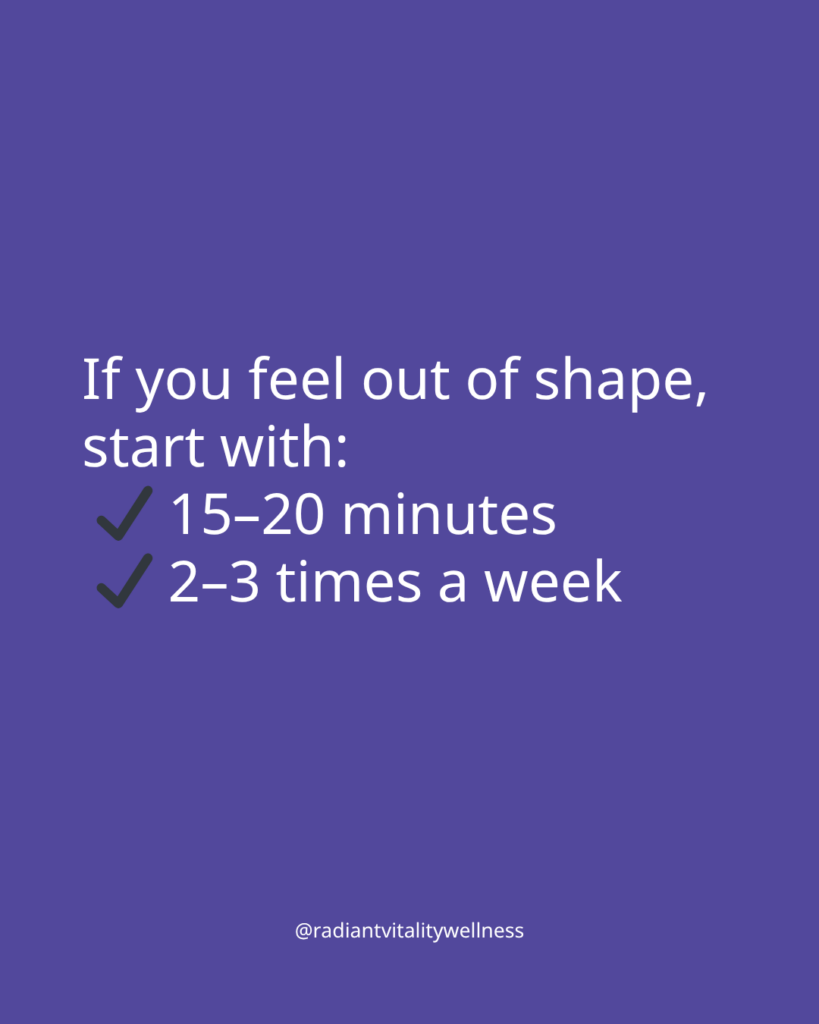
Start with:
- 15–20 minutes
- 2–3 times per week
That’s it.
Research shows that even short, consistent strength training sessions can significantly improve strength and health markers over time (ACSM, 2021).
Consistency matters more than intensity.
Always.
2. Focus on Just a Few Basic Movements
You don’t need a complicated program or a huge variety of exercises.
In fact, keeping it simple is one of the most effective ways to build confidence and strength.
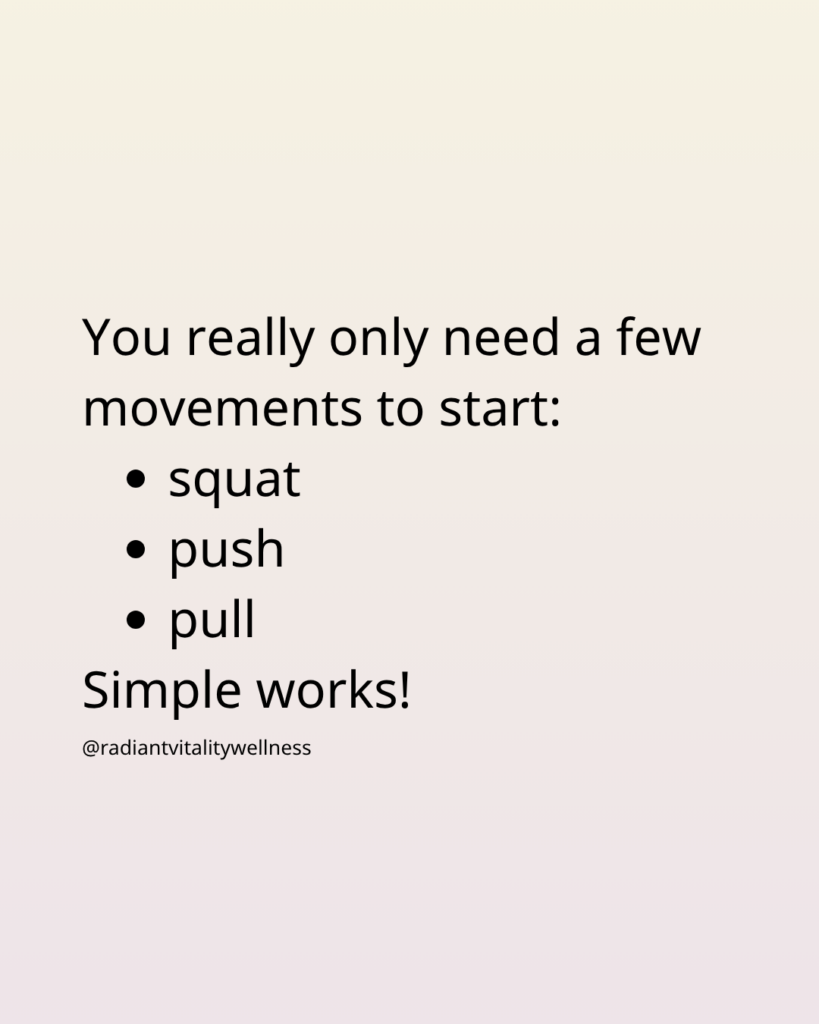
Start with foundational movement patterns:
- Squat (or sit-to-stand from a chair)
- Push (like a chest press)
- Pull (like a row)
These movements target major muscle groups and support everyday function—things like getting up from a chair, carrying groceries, or pushing a door open.
Simple = effective.
3. Choose Options That Feel Safe for Your Body
This is a big one—especially for anyone dealing with pain, past injuries, or mobility limitations.
If something hurts (beyond mild effort or muscle fatigue), it’s not the right version for you right now.
You can always adjust:
- range of motion
- weight
- level of support (chair, wall, bands, etc.)
Research supports that modifying exercises improves adherence and reduces injury risk—especially in beginner populations (Lauersen et al., 2014).
Your body isn’t the problem.
The exercise just needs to meet you where you are.
4. Go Slower Than You Think You Need To
Most beginners don’t fail because they do too little.
They struggle because they try to do too much, too soon.
Instead:
- repeat the same movements for a few weeks
- focus on learning the exercises
- build confidence before increasing difficulty
Progressive overload (gradually increasing challenge) is important—but it works best when your body has time to adapt.
Slower progress is not a setback.
It’s actually how sustainable strength is built.
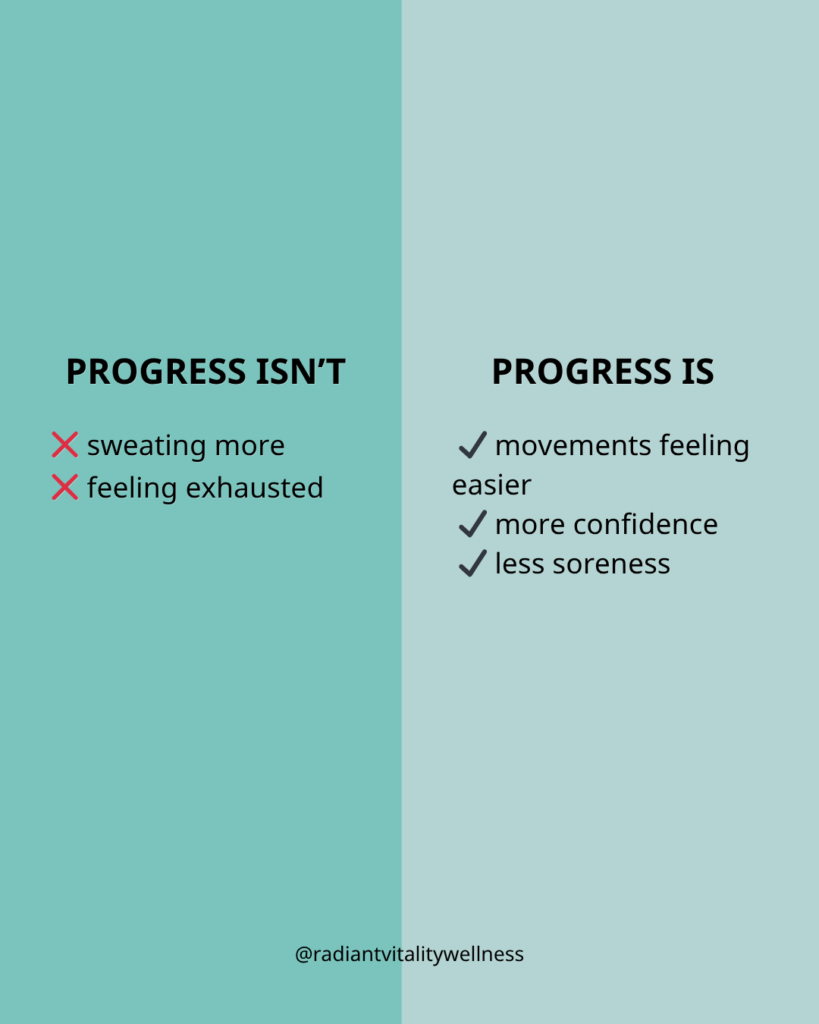
5. Measure Progress Differently
If you’re only measuring progress by:
- calories burned
- sweat level
- how hard the workout felt
…it’s going to be discouraging.
Especially at the beginning.
Instead, look for:
- movements feeling easier
- less soreness after workouts
- improved energy levels
- increased confidence
- better day-to-day function
These are meaningful, research-backed indicators of progress in beginner strength training programs (Westcott, 2012).
And they matter so much more than what your fitness tracker says.
A Different Way to Approach Strength Training
This is exactly the approach I take inside my coaching.
We don’t jump into intense workouts.
We don’t push through pain.
We don’t try to “fix” your body.
Instead, we:
- start where you are
- build gradually
- focus on movements that feel good
- create a routine that actually fits your life
Because strength training should feel supportive—not punishing.
You Don’t Have to Figure This Out Alone
If you’ve been feeling stuck, overwhelmed, or unsure where to start with strength training…
You don’t have to do this on your own.
You can browse our website to learn more about working together, or simply reach out and ask me a question.
I’m always happy to chat 💛
References
- American College of Sports Medicine (ACSM). (2021). ACSM’s Guidelines for Exercise Testing and Prescription.
- Westcott, W. L. (2012). Resistance training is medicine: effects of strength training on health. Current Sports Medicine Reports.
- Lauersen, J. B., et al. (2014). The effectiveness of exercise interventions to prevent sports injuries. British Journal of Sports Medicine.
Radiant Vitality – Kim Hagle
Personal Trainer in Goderich, ON offering Size Inclusive Fitness to Women 35-55 in Huron County and Beyond
Check Out Our Latest Posts
-
Do You Need to Get in Shape Before Hiring a Personal Trainer?
Thinking about hiring a personal trainer but feel like you need to get in shape first? You’re not alone. In this post, we break down five key points to help you understand what personal training really is —and who it’s actually for. (Hint: it’s not just athletes or already-fit people.) You’ll learn why starting with…
-
5 Ways to Start Strength Training When You Feel Completely Out of Shape
In 5 Ways to Start Strength Training When You Feel Completely Out of Shape, you’ll learn how to begin in a way that actually feels doable. If you’re feeling overwhelmed, out of shape, or unsure where to start, this guide breaks it down into five simple, realistic steps. From starting smaller than you think to…
-

Resistance Bands vs Weights for Beginners: Which Is Better to Start With?
If you’re new to strength training, it’s common to wonder whether you should be using resistance bands or weights. Both can help you build strength — but they don’t feel the same, especially for beginners. This post compares resistance bands vs weights for beginners, looking at joint impact, ease of use, cost, and confidence. You’ll…